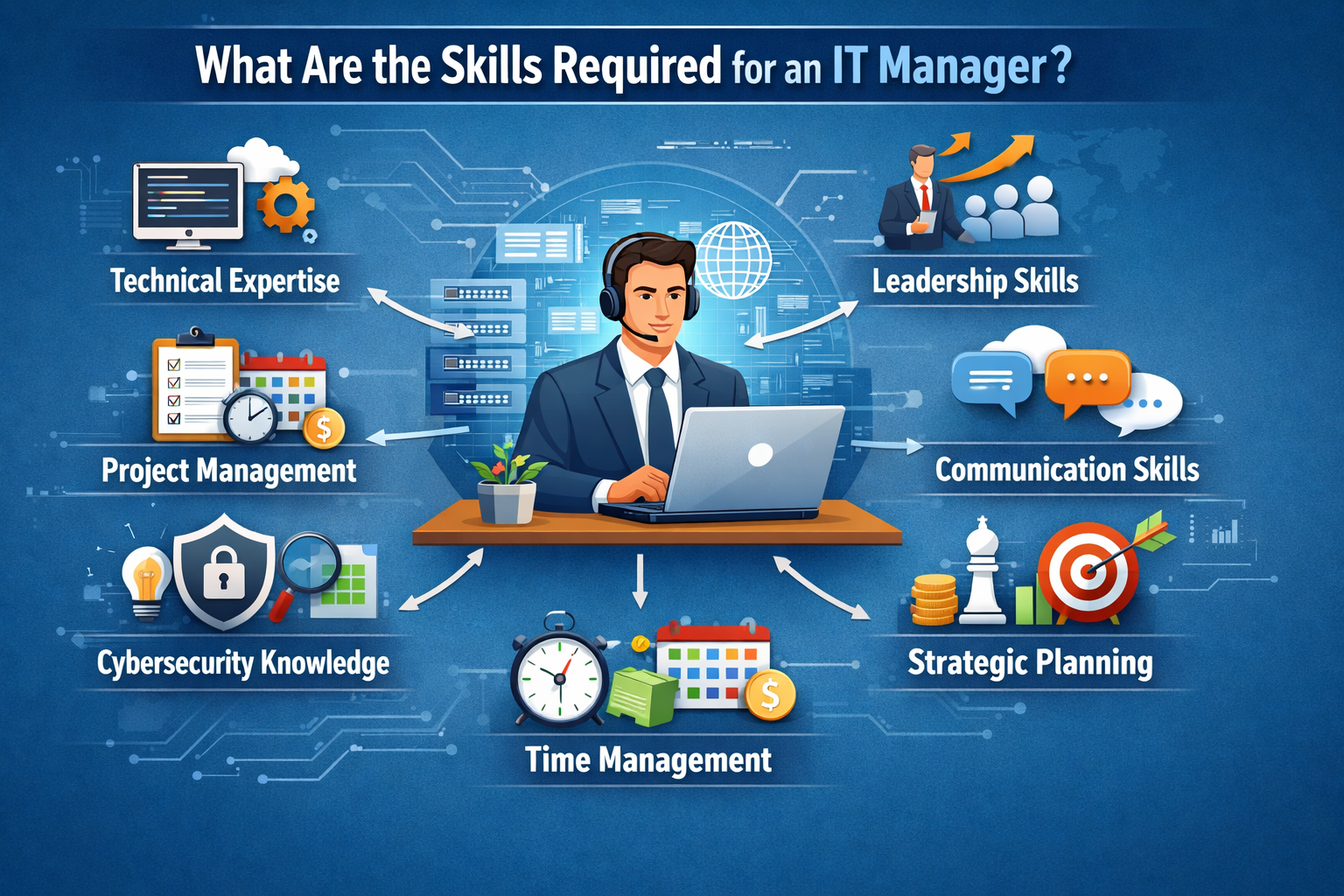
In today’s digital-first world, organizations depend heavily on technology to operate efficiently, stay secure, and remain competitive. At the center of this technology ecosystem is the IT Manager—a professional responsible for planning, implementing, and managing an organization’s IT infrastructure and teams. To succeed in this role, an IT Manager must possess a balanced mix of technical expertise, leadership ability, and strategic thinking.
This article explores the key skills required for an IT Manager, making it useful for students, professionals, and anyone aspiring to build a career in IT management.
1. Strong Technical Knowledge
An IT Manager must have a solid understanding of core information technology concepts. While they may not handle daily hands-on tasks, they must be capable of guiding teams, evaluating systems, and making informed decisions.
Key technical areas include:
- Computer networks and system architecture
- Operating systems (Windows, Linux, macOS)
- Cloud computing platforms
- Databases and data management
- Cybersecurity principles
- Hardware and software troubleshooting
A strong technical foundation allows IT Managers to communicate effectively with technical teams and assess risks and solutions accurately.
2. Leadership and Team Management Skills
One of the most important skills for an IT Manager is leadership. IT Managers supervise teams of developers, engineers, administrators, and support staff. They must motivate employees, resolve conflicts, and ensure productivity.
Essential leadership abilities include:
- Team coordination and delegation
- Performance evaluation
- Mentoring and coaching
- Conflict resolution
- Encouraging collaboration
A good IT Manager creates a positive work environment where team members feel supported and motivated to perform at their best.
3. Communication Skills
IT Managers act as a bridge between technical teams and non-technical stakeholders such as executives, clients, and other departments. Strong communication skills are essential for translating complex technical information into simple, understandable terms.
Important communication skills include:
- Clear verbal communication
- Professional written communication
- Presentation skills
- Active listening
Effective communication helps avoid misunderstandings, ensures smoother project execution, and builds trust across the organization.
4. Strategic Thinking and Planning
IT Managers are not just problem solvers; they are also planners. They must align technology strategies with organizational goals and future growth plans.
Strategic skills include:
- Long-term IT planning
- Technology forecasting
- Resource allocation
- Risk assessment
- Decision-making
An IT Manager should be able to evaluate emerging technologies and decide whether they will add value to the business.
5. Project Management Skills
IT Managers often oversee multiple projects simultaneously, such as system upgrades, software implementations, or security improvements. Strong project management skills help ensure projects are completed on time and within budget.
Key project management abilities include:
- Task scheduling
- Budget management
- Deadline tracking
- Risk management
- Coordination with stakeholders
Familiarity with project management methodologies such as Agile or Waterfall is an added advantage.
6. Problem-Solving and Analytical Skills
Technology environments are dynamic, and issues can arise unexpectedly. An IT Manager must be able to analyze problems quickly and implement effective solutions.
Problem-solving skills involve:
- Identifying root causes
- Evaluating multiple solutions
- Making quick, informed decisions
- Managing high-pressure situations
Strong analytical thinking enables IT Managers to minimize downtime and prevent future issues.
7. Cybersecurity Awareness
With increasing cyber threats, IT Managers play a crucial role in protecting organizational data and systems. While they may not be security specialists, they must understand cybersecurity best practices.
Important cybersecurity skills include:
- Risk management
- Data protection policies
- Access control management
- Incident response planning
- Compliance awareness
A proactive approach to cybersecurity helps safeguard sensitive information and maintain business continuity.
8. Business and Financial Understanding
IT Managers must understand how technology impacts business operations and finances. They are often responsible for managing IT budgets and justifying technology investments.
Business-related skills include:
- Budget planning
- Cost optimization
- Vendor management
- Understanding business workflows
- Return on investment analysis
This skill set helps IT Managers make cost-effective decisions that support organizational objectives.
9. Adaptability and Continuous Learning
Technology evolves rapidly, making adaptability a critical skill. Successful IT Managers stay updated with the latest trends, tools, and industry best practices.
Key traits include:
- Willingness to learn new technologies
- Openness to change
- Keeping up with industry trends
- Encouraging innovation
Continuous learning ensures that IT Managers remain relevant and capable of leading modern IT environments.
10. Time Management and Organizational Skills
IT Managers juggle multiple responsibilities, including team supervision, system maintenance, project delivery, and strategic planning. Strong time management ensures all tasks are handled efficiently.
Organizational skills include:
- Prioritizing tasks
- Managing deadlines
- Balancing short-term and long-term goals
- Delegating effectively
Good time management improves productivity and reduces workplace stress.
Conclusion
The role of an IT Manager is both challenging and rewarding. It requires a unique blend of technical expertise, leadership ability, strategic thinking, and business awareness. As organizations continue to rely on technology for growth and innovation, the demand for skilled IT Managers remains strong.
By developing these essential skills, aspiring IT Managers can build successful careers and play a key role in shaping the digital future of their organizations.