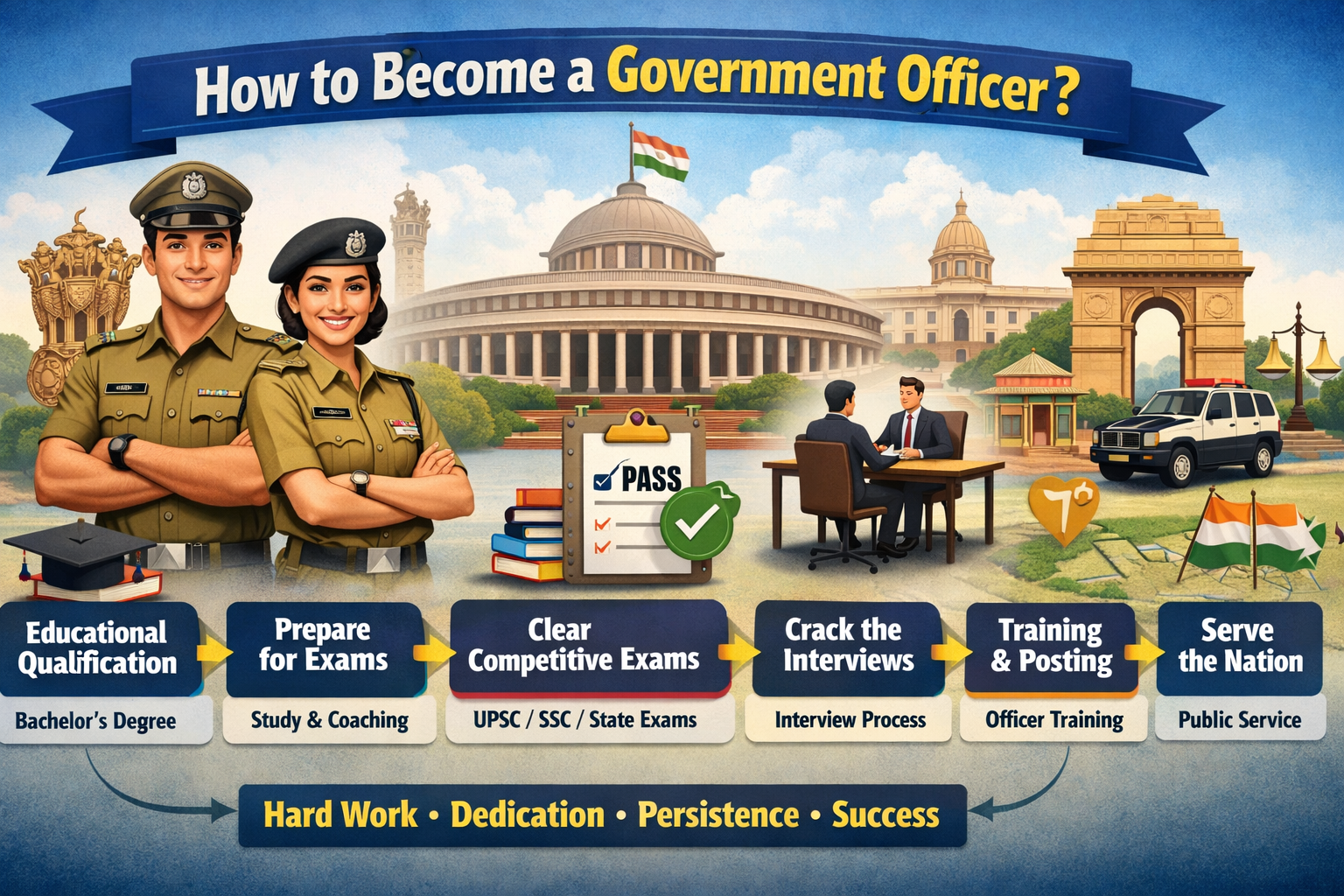
Becoming a government officer is a dream for many individuals due to job security, social respect, stable income, and opportunities to serve the nation. Government officers work in various departments such as administration, police, revenue, defense, education, healthcare, and public sector organizations. Although the journey requires dedication, planning, and patience, it is achievable with the right approach. This article explains how to become a government officer step by step.
Understanding the Role of a Government Officer
A government officer is a public servant appointed by the government to manage administrative, technical, or operational responsibilities. Their role depends on the department they work in. For example, civil service officers handle administration and policy implementation, police officers maintain law and order, and revenue officers manage taxation and land records. Government officers are expected to work with integrity, responsibility, and commitment to public welfare.
Types of Government Officer Positions
Before starting preparation, it is important to understand the different types of government officer roles available:
- Civil Services Officers (IAS, IPS, IFS, IRS)
- State Government Officers (State PCS, State Police, Revenue Officers)
- Defense Officers (Army, Navy, Air Force)
- Banking Officers (PO, RBI Grade B)
- SSC Officers (Income Tax Officer, Excise Officer, Auditor)
- Teaching and Academic Officers
- Public Sector Undertaking Officers
Each role has different eligibility criteria, exams, and selection processes.
Check Eligibility Criteria Carefully
Eligibility criteria vary depending on the exam and position, but generally include:
Educational Qualification
Most government officer exams require a bachelor’s degree from a recognized university. Some technical roles may require specific degrees such as engineering, law, or medicine.
Age Limit
Government exams have minimum and maximum age limits. Age relaxation is provided for reserved categories as per government rules.
Nationality
Most government officer posts require the candidate to be a citizen of the country.
Always verify eligibility before applying to avoid disqualification later.
Choose the Right Government Exam
Selecting the right exam is a crucial step. Some popular exams include:
- Civil Services Examination
- State Public Service Commission Exams
- SSC CGL and SSC CHSL
- Banking Exams (PO, SO)
- Defense Officer Exams
Choose an exam based on your qualification, interest, and long-term career goals.
Understand the Exam Pattern and Syllabus
Every government exam has a specific exam pattern and syllabus. Generally, exams include:
- Preliminary Exam (objective type)
- Main Exam (written or descriptive)
- Interview or Personality Test
- Physical or Medical Test (for specific posts)
Understanding the syllabus helps you focus on relevant topics and avoid wasting time on unnecessary material.
Create a Smart Study Plan
A well-structured study plan increases your chances of success. While preparing:
- Divide the syllabus into manageable sections
- Allocate daily study hours
- Include time for revision
- Practice mock tests regularly
- Maintain consistency
Quality study is more important than long study hours. Focus on understanding concepts rather than memorizing facts.
Choose the Right Study Resources
Use reliable and standard study materials. Avoid collecting too many books, as it creates confusion. Stick to a limited number of quality resources and revise them multiple times. Reading newspapers, current affairs magazines, and official reports also helps in staying updated.
Practice Answer Writing and Mock Tests
Practice is essential for government exams. Regularly attempt mock tests to:
- Improve speed and accuracy
- Understand exam pressure
- Identify weak areas
- Build confidence
For descriptive exams, practice answer writing to improve clarity, structure, and presentation.
Stay Physically and Mentally Fit
Some government officer roles require physical fitness tests. Regular exercise, proper diet, and adequate sleep are important. Mental fitness is equally essential. Avoid stress, stay positive, and take short breaks during preparation.
Prepare for the Interview Stage
If the exam includes an interview, focus on:
- Communication skills
- General awareness
- Confidence and honesty
- Knowledge about your background and chosen field
Interview panels look for personality, leadership qualities, and decision-making skills.
Apply on Time and Follow Official Notifications
Regularly check official notifications for exam dates, application deadlines, and updates. Fill application forms carefully and keep documents ready to avoid last-minute issues.
Develop Patience and Persistence
Becoming a government officer is a competitive process. Success may not come in the first attempt. Learn from failures, improve strategies, and stay persistent. Many successful officers cleared exams after multiple attempts.
Benefits of Becoming a Government Officer
Some key advantages include:
- Job security
- Fixed working hours (in many roles)
- Respect and social status
- Attractive salary and allowances
- Pension and retirement benefits
- Opportunity to serve society
These benefits make government jobs highly desirable.
Conclusion
Becoming a government officer requires dedication, discipline, and a clear strategy. By understanding eligibility, choosing the right exam, preparing systematically, and staying consistent, you can achieve this goal. The journey may be challenging, but the rewards are worth the effort. Start early, stay focused, and believe in your abilities.